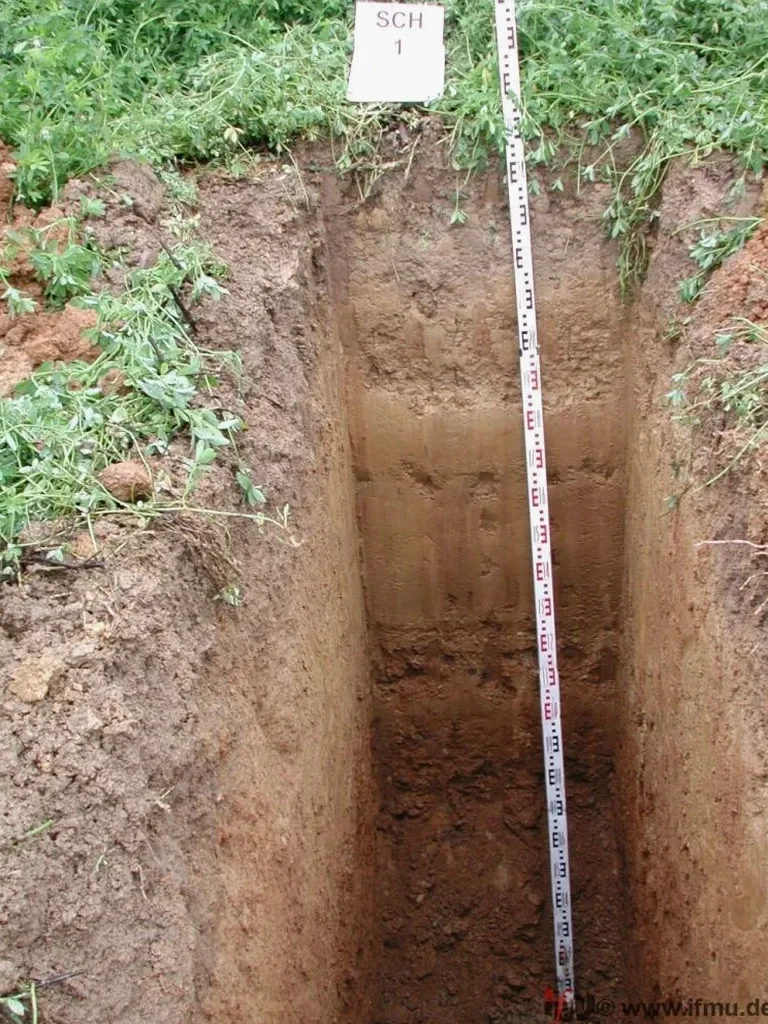
Raleigh sits squarely in the Piedmont physiographic province, where the near-surface geology is dominated by weathered saprolite derived from felsic gneiss and schist of the Rolesville batholith. This residual soil profile can transition from stiff sandy silt to partially weathered rock within 3 to 8 feet, a condition that makes visual logging indispensable. An exploratory test pit lets our team directly observe that transition zone, measure discontinuities, and collect undisturbed block samples where auger refusal would otherwise end the investigation. For deeper refusal layers, we often pair this with SPT drilling to extend the stratigraphic column beyond the reach of the excavator. Local experience matters because saprolite behavior in the Falls Lake area differs markedly from the Triassic basin sediments southeast of downtown.
A single exploratory test pit often replaces a dozen split-spoon samples when the question is about fill composition or shallow bearing stratigraphy.
Process and scope
Site-specific factors
IBC Section 1803 requires soil classification for foundation design, and in Raleigh's saprolitic terrain the visual inspection from an exploratory test pit is often the only reliable way to distinguish residual soil from weathered rock without coring. Skipping this step has led to footing over-excavation claims when contractors hit refusal on boulders within the saprolite, mistaking them for bedrock. A properly logged pit wall eliminates that ambiguity. The risk is amplified on sloped lots near the Neuse River valley, where colluvial deposits mask the true bearing stratum. When the pit reveals a groundwater table higher than anticipated, we can install a piezometer directly from the pit floor and incorporate the data into the slope stability analysis before grading permits are filed.
Reference standards
ASTM D2487 – Standard Practice for Classification of Soils for Engineering Purposes (Unified Soil Classification System), OSHA 29 CFR 1926 Subpart P – Excavations, IBC 2021 Section 1803 – Geotechnical Investigations, ASCE 7-22 – Minimum Design Loads for Buildings and Other Structures
Complementary services
Shallow Foundation Verification
Direct observation of bearing stratum continuity for spread footings and mat foundations, with plate load testing on pit floor when required.
Utility Corridor Profiling
Mapping fill depth, rock head, and groundwater along linear alignments before trenchless installation or open-cut construction in downtown Raleigh.
Seepage & Drainage Assessment
Measuring infiltration rates and perched water zones within the saprolite profile to design subdrain systems for retaining walls and basements.
Typical parameters
Common questions
What is the typical cost for an exploratory test pit in Raleigh?
For a standard pit up to 10 feet deep with visual logging, sampling, and a brief report, costs generally run between US$460 and US$790. The final figure depends on access constraints, spoil removal requirements, and whether laboratory testing of block samples is added to the scope.
How deep can an exploratory test pit go in Piedmont saprolite?
With a standard hydraulic excavator we typically reach 12 to 16 feet before encountering partially weathered rock that requires hammering. In areas close to the Fall Line, refusal may be shallower due to more resistant gneiss boulders within the saprolite matrix.
Does OSHA require a registered engineer to log the pit?
OSHA Subpart P requires a competent person to classify the soil for excavation safety, but for geotechnical logging IBC Section 1803 expects a licensed engineer or qualified technician to document the stratigraphy, collect samples, and prepare the report used for foundation design.
How quickly can the pit report be delivered after fieldwork?
A field log with photographs and preliminary classification is available within 24 hours. The final signed report, which integrates lab results from any bulk or block samples collected, is typically delivered in three to four working days.