The rolling hills of Raleigh look gentle, but they hide a complex subsurface. The Piedmont region’s deep residual soils and weathered rock—technically saprolite—react unpredictably to heavy rain. When a developer cuts into a hillside off Glenwood Avenue or plans a retention pond near the Neuse River trail, the natural moisture equilibrium shifts. That’s where a serious slope stability analysis comes in. Our team looks at pore pressure buildup, soil cohesion loss, and the angle of the underlying gneiss and schist bedrock. We combine field data from test pits with lab shear strength tests to model failure surfaces before the first yard of earth is moved. Raleigh’s humid subtropical climate, with over 45 inches of rain annually, means every slope design here has to handle saturation scenarios that drier regions never face.
In Raleigh’s Piedmont, a stable slope isn’t just about the right angle—it’s about managing water before it finds the weak layer.
Process and scope
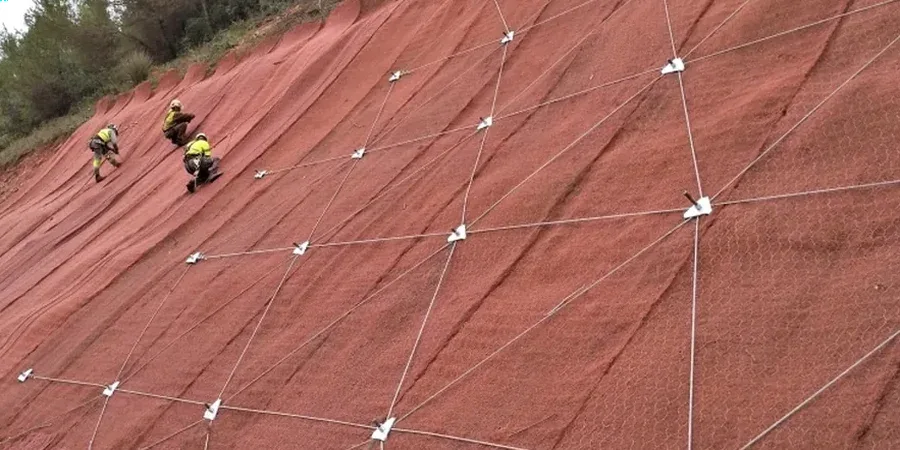
Site-specific factors
We’ve seen too many retaining wall failures in North Raleigh subdivisions where the builder skipped the slope stability analysis. The classic sign is a tension crack opening up three feet behind the wall after a tropical storm passes through. At that point, the repair costs triple. The real danger isn’t the obvious 45-degree cut—it’s the slow creep in clay-rich residuum that goes unnoticed until a foundation corner settles. Raleigh’s winter freeze-thaw cycles add another wrinkle, loosening the near-surface fabric and letting spring rains penetrate deeper. A proper analysis doesn’t just check the global factor of safety; it looks at internal erosion potential, the impact of future construction uphill, and whether a temporary construction slope will hold during a 10-year storm event. Skipping this step is gambling with a liability that insurance rarely covers.
Reference standards
IBC 2021 (Chapter 18 – Soils and Foundations), ASCE 7-22 (Minimum Design Loads for Buildings and Other Structures), NCDOT Standard Specifications for Roads and Structures, ASTM D1586 (Standard Penetration Test), ASTM D3080 (Direct Shear Test for Soils)
Complementary services
Residential and light commercial slope evaluation
For single-family homes, townhouse developments, and small retail pads on sloping lots. Includes field reconnaissance, soil borings, lab shear testing, and a stability report stamped by a licensed North Carolina engineer. We provide clear recommendations for benching, drainage, and vegetation management that Wake County plan reviewers accept.
Deep excavation and infrastructure slope design
For roadway cuts, utility trenches, stormwater basins, and large commercial excavations where temporary shoring and permanent slopes must meet NCDOT standards. We model both short-term (undrained) and long-term (drained) conditions using pore pressure data from piezometers installed during the investigation.
Typical parameters
Common questions
How much does a slope stability analysis cost in Raleigh?
For a typical residential lot or small commercial site in the Raleigh area, our slope stability analysis packages range from US$1,080 to US$3,670. The final cost depends on the slope height, access conditions, number of borings required, and whether we’re analyzing a single cut or a complex multi-slope grading plan. You’ll get a firm quote after we review your site plan and topo survey.
When does Wake County require a slope stability report?
Wake County and City of Raleigh plan reviewers typically trigger a slope stability report when cuts or fills exceed 5 feet in height and the natural slope exceeds 15 percent, or when construction is proposed within a mapped landslide hazard area. The report must be sealed by a licensed engineer and demonstrate a minimum factor of safety of 1.5 for static conditions. We handle the submittal process and respond to reviewer comments directly.
What soil testing is required for the analysis?
We need undisturbed shear strength parameters, so the investigation usually includes SPT borings with split-spoon sampling and thin-wall Shelby tubes in finer-grained soils. Direct shear or triaxial testing on representative samples gives us effective cohesion and friction angle. If groundwater is a concern—and in Raleigh it often is—we install temporary piezometers to measure the phreatic surface and feed that into the seepage model.
Can you analyze an existing slope that’s showing signs of movement?
Yes, and those are the jobs where time matters most. We start with a site visit to map tension cracks, leaning trees, and seepage points. Then we run a back-analysis to determine the in-situ shear strength at the time of failure. This forensic approach tells us exactly what remediation strategy will work—whether that means regrading, installing horizontal drains, or building a toe buttress. We’ve stabilized slopes in neighborhoods like Stonehenge and inside the Beltline using this method.